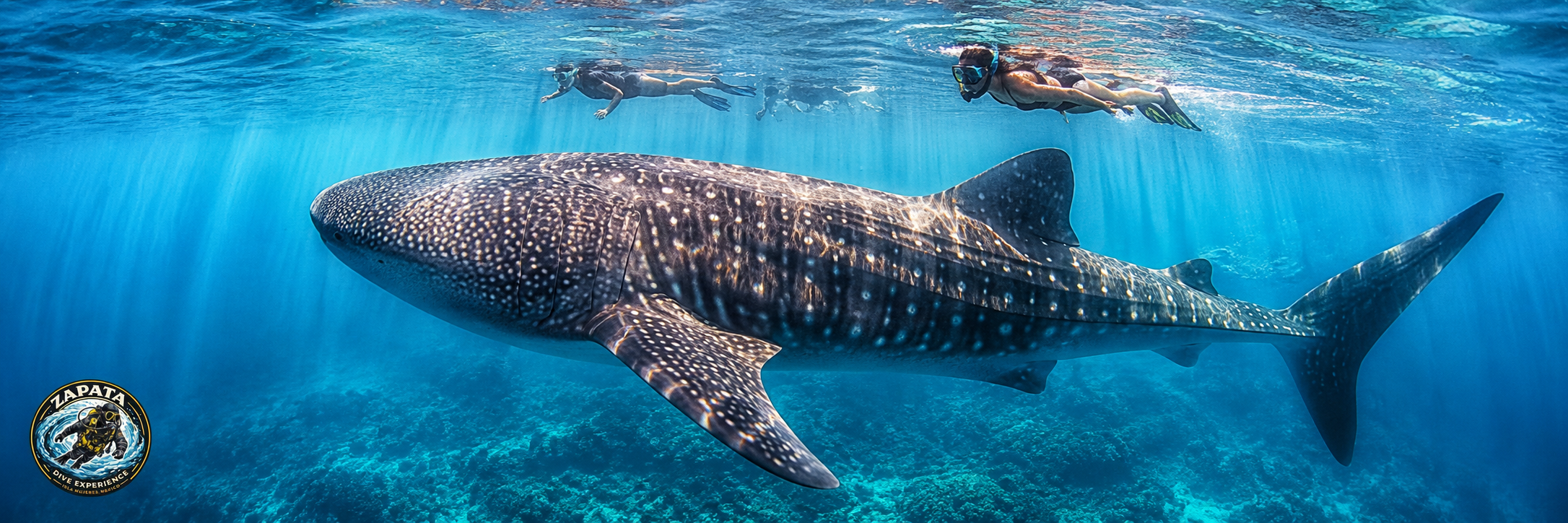
Every summer, hundreds of whale sharks — the largest fish on Earth — gather in the waters just north of Isla Mujeres, México. It's the biggest known aggregation on the planet, and it happens right here.
The season runs from May 15 to September 17. Tours run five to six hours. No scuba certification needed. And if you're reading this between June and August, spots are already disappearing.
This guide covers everything: when to come, what happens on the boat, how to choose the right tour, and why launching from Isla Mujeres gives you more time in the water than any tour from Cancún.
Whale Shark Season at a Glance
Before anything else, here are the numbers that matter:
Season window: May 15 – September 17 (set by SEMARNAT, México's federal environmental agency — no legal tours run outside these dates)
Peak months: July and August — the most sharks, the most feeding activity
Tour length: 5–6 hours including transit, multiple swims, a snorkel stop, and lunch at Playa Norte
Who can join: Ages 4+, no diving experience required — this is snorkeling in the open Caribbean
Best for fewer crowds: June and September
Quick note: If someone is advertising whale shark tours in October or April, walk away. That's not a tour. That's a red flag.
Why Do the Whale Sharks Come Here?
This isn't random. Every summer, the open ocean north of Isla Mujeres explodes with a massive tuna spawn — specifically little tunny (Euthynnus alletteratus) — releasing enormous clouds of fish eggs just below the surface. Whale sharks (Rhincodon typus) travel across oceans to feed on this. Hundreds of them. At the same time. In a zone locals and marine biologists call Afuera.
Other places see whale sharks. Holbox gets some seasonal visitors in shallower water. Parts of the Philippines and Western Australia have their own encounters. But nowhere on the planet produces the density of feeding whale sharks that the waters off Isla Mujeres do between June and August. On a strong day, you can see dozens of dorsal fins breaking the surface at once.
That's not marketing. That's marine biology.
When Exactly Should You Book?
The season is four months long, but the experience shifts depending on when you go:
May — Shark numbers building with early arrivals. Very light crowds. Calm seas, warm water.
June — Shark numbers growing steadily. Moderate crowds. Excellent visibility.
July — Peak, hundreds of sharks present. High crowds. Full feeding activity.
August — Maximum aggregation. Highest crowds. Best chance for massive encounters.
September — Still active, tapering. Thinning crowds. Seas can pick up late in the month.
For the biggest encounters: July or August. No contest. The tuna spawn is at full intensity and the sharks are stacked up in the feeding zone. The tradeoff: private tours and preferred departure slots fill up 4–6 weeks in advance.
For a quieter, more personal experience: June or September. Fewer boats. More relaxed rotations in the water. Shark activity is still genuinely impressive. If your group includes young kids or you just prefer a calmer day, these shoulder months deserve a serious look.
👉 Request Your Tour Date — tell us your preferred month and group size and we'll confirm availability.
What Actually Happens on Tour Day
You've seen the photos. Here's what happens between stepping onto the dock and getting back to shore with salt in your hair and a memory that won't leave.
8:00 AM — Meet at the Dock
You'll meet the crew at 8:00 AM at our Isla Mujeres dock. Before we board, we start the morning right — coffee, fresh bread, and bananas. It's a light breakfast on purpose. You want enough energy without anything heavy sitting in your stomach once the boat starts moving.
8:45 AM — We Head Out
The boat leaves the dock around 8:45 AM. The ride to the whale shark zone takes about an hour, depending on where the sharks are feeding that day. But the transit itself is part of the experience — keep your eyes on the water. On a good morning, you'll spot sea turtles, dolphins, and large manta rays cruising near the surface before you even reach the sharks.
Finding the Sharks
Guides communicate with other boats and draw on years of local knowledge to locate the densest feeding activity. As the water shifts from turquoise shallows to deep open blue, you'll know you're getting close. Then the fins start appearing.
The Briefing
Before anyone touches the water, your guide runs through the entry protocol:
Two swimmers + one guide enter at a time — this is strictly enforced. No touching the animals — ever. No flash photography. No swimming above the shark or cutting across its path. Stay within arm's reach of your guide in open water.
This briefing is short. The information in it is specific to conditions that day. Listen to every word.
In the Water
You slip off the side of the boat and suddenly you're in open Caribbean water next to an animal that can stretch 40 feet long. It moves slowly, deliberately, mouth wide open filtering the tuna eggs near the surface. The pattern of pale spots against dark skin. The sheer, quiet mass of it.
Everyone on the boat swims in pairs, one pair at a time. Once all swimmers have had their first rotation, we go around again for a second round. If conditions are right and the shark is still there, a third round is possible. Some days the water is glass. Some days there's chop and real current. Being comfortable snorkeling in open ocean matters — but you don't need to be an expert. You need to be honest about your comfort level.
After the Sharks — Sandwiches on Board
Once the whale shark swims are done, sandwiches are served on the boat while we start heading back toward the island. You've earned them.
Playa Norte — Snorkel, Ceviche, and Cold Drinks
On the return, we stop at Playa Norte — consistently ranked one of the best beaches in México. You'll snorkel in the shallow turquoise water, then settle in on the beach for fresh ceviche, cold beers, sodas, and water. It's the perfect wind-down after an intense morning on open ocean.
After lunch, we head back to the departure dock. Most guests are back on shore between 1:00 and 2:00 PM — leaving the rest of your day wide open.
👉 Reserve Your Spot Now — private tours during July and August fill first. Don't wait until you land.
Private vs. Group Tour: Which One Is Worth It?
This is the decision most people overthink. Here's the honest breakdown.
Group Tours
Shared boat, up to 10 guests. Lower cost. Fixed schedule — you depart, rotate, and return on the boat's timetable. Social energy, great for solo travelers or couples.
The catch: During peak season (July–August), group spots on reputable boats book out weeks ahead. Showing up in Isla Mujeres and hoping for availability is a reliable way to miss the experience entirely.
Private Tours
Your group has the whole boat. Flexible departure time. Your guide's full attention is on your party. Room to breathe — if the sharks are stacked and your group wants another rotation, that conversation happens. Families with kids, small groups who want a slower pace, or anyone who doesn't want to share the moment — this is the format.
At Zapata Dive Experiences, group sizes stay small regardless of tour type. Fewer people per rotation means more time alongside the sharks and less time treading water waiting for your turn. That's a deliberate choice.
Isla Mujeres vs. Cancún: Where Should You Board the Boat?
If you're staying in Cancún's hotel zone, you'll see whale shark tours advertised everywhere. Here's what those ads don't mention:
The sharks gather north of Isla Mujeres. Every tour — whether it departs from Cancún or from the island — is going to the same place.
From Isla Mujeres: approximately 1 hour to the aggregation zone. From Cancún hotel zone: add another 45–90 minutes of transit each way.
Over a five-to-six-hour tour, that extra travel time comes directly out of your time in the water. Fewer rotations. Fewer swims. More time sitting on a boat.
Cancún departures also tend to use larger group boats built for volume. Isla Mujeres operators run smaller, more maneuverable boats suited to open-ocean conditions and personal attention.
The move savvy travelers make: Take the ferry from Cancún to Isla Mujeres the day before. Join a tour that launches from the island. Maximize your actual time with the sharks instead of spending it in transit.
👉 Staying in Cancún? Message us on WhatsApp and we'll help you plan the crossover.
Rules of the Water: What Every Swimmer Needs to Know
Every licensed whale shark tour operates under strict SEMARNAT regulations inside the Whale Shark Biosphere Reserve. These aren't suggestions — they're enforced, and they exist because whale sharks (Rhincodon typus) are classified as endangered on the IUCN Red List.
The non-negotiables:
No touching the animals — no exceptions, no "just a quick tap." No riding sharks or grabbing fins. No flash photography underwater. Reef-safe, biodegradable sunscreen only — conventional sunscreen is prohibited in the water. Life jackets required for all swimmers at all times. Maximum two swimmers + one guide per rotation.
These rules protect the sharks. They also protect you. Open ocean with current is a different environment than a resort pool. Your guide's briefing covers conditions specific to that day — pay attention.
How to spot a questionable operator: If they let more than two swimmers in at a time, skip the safety briefing, allow touching, or don't mention sunscreen restrictions — get off that boat.
What to Pack (and What We Provide)
Pack light. Pack smart. Forget one thing and it can turn an incredible day into an uncomfortable one.
You bring:
Reef-safe biodegradable sunscreen (this is enforced, not optional) Rash guard or lightweight wetsuit top (sun protection + mild jellyfish defense) Underwater camera or GoPro — no flash, use a wrist strap (the chop is real) Seasickness medication — take it the evening before, not the morning of Cash for crew tips Towel Dry clothes for the ride back
We provide:
Light breakfast at the dock (coffee, bread, bananas) Snorkel gear (mask + fins) Life vest Sandwiches on board after the whale shark swims Fresh ceviche lunch at Playa Norte Drinks throughout — water, sodas, and beer
Not included: Photos and video, towels, crew gratuities
On seasickness: The transit to Afuera crosses open Caribbean water. If you've ever felt queasy on a boat, take preventive medication the night before. This is not the day to test your sea legs.
Book Your Whale Shark Tour with Zapata Dive Experiences
This is the part where the calendar starts working against you. Private tours in July and August fill 4–6 weeks before departure. Even June slots move faster than most visitors expect. Waiting until you arrive on the island is a gamble that rarely pays off during peak season.
What you get with Zapata:
Based directly on Isla Mujeres — shortest transit to the sharks. Bilingual certified guides (English and Spanish). Deliberately small groups — more water time, less waiting. 20 years of local knowledge in these waters (40,000+ dives, 500+ divers certified through PADI). Full day experience: whale shark swims, Playa Norte snorkel, fresh ceviche lunch, and cold drinks included. Simple 50% deposit to reserve — balance due on tour day.
Three ways to lock in your date:
Book online — check pricing and reserve with a deposit.
WhatsApp us directly — tell us your dates, group size, and whether you want private or group.
Email: divewithzapata@gmail.com
Include your preferred month, number of swimmers, and whether you want a private or shared boat. We'll confirm availability and send you a secure payment link to hold your spot.
Visiting outside whale shark season? Zapata's snorkeling tours run year-round across some of the finest reef systems in the Mexican Caribbean — including MUSA (the Underwater Museum) and Manchones Reef. The ocean doesn't close in October.
👉 Request Your Tour Date Now
Frequently Asked Questions
Do I need to know how to scuba dive? No. This is entirely snorkeling — mask, fins, life vest, surface level. No certification required.
What's included in the tour? Breakfast at the dock (coffee, bread, bananas), all snorkel gear, sandwiches after the whale shark swims, fresh ceviche lunch at Playa Norte, and drinks all day — water, sodas, and beer. Photos, video, towels, and crew tips are not included.
How many times do I get to swim with the sharks? Everyone gets at least two rotations in the water, swimming in pairs with a guide. If the shark is still in the area and conditions allow, a third round is possible.
Can kids join? Most tours allow ages 4 and up. A private tour gives families more flexibility and a calmer pace.
What else might I see on the way out? The transit to the whale shark zone regularly produces sightings of sea turtles, dolphins, and large manta rays. Keep your camera ready before you even reach the sharks.
What if the weather cancels our tour? If the port authority closes the port due to conditions, we reschedule or refund. That's standard for every licensed operator.
Will I definitely see whale sharks? During peak season (June–August), the success rate is extremely high — we're talking about the largest known aggregation site in the world. On a strong day, you'll see dozens. Zero-sighting days during peak months are exceptionally rare.
Is it safe? Yes — with a responsible operator. You're snorkeling with a certified guide in open water with a life vest. The sharks are filter feeders. They have zero interest in you. The guide manages all entry and exit and monitors conditions throughout.
How far in advance should I book? For July and August private tours: 4–6 weeks minimum. For June and September: 2–3 weeks is usually fine, but earlier is better. Group spots vary — ask us.
Zapata Dive Experiences operates from Isla Mujeres, México. PADI certified instruction since 2016. Divemaster since 2006.