Overcoming fear of scuba diving is achieved by choosing a patient instructor, practicing controlled breathing, and using grounding techniques like focusing on marine life to manage anxiety. Beginners should communicate their concerns early and start with supervised introductory programs to build confidence in a controlled environment. Consistent practice and focusing on specific skills help shift the mind away from panic; this ultimately makes the underwater experience more enjoyable.
The silence of the ocean can feel like a barrier rather than an invitation when your pulse quickens at the mere thought of being submerged. For many, the transition from the surface to the depths is clouded by a primal anxiety that overrides the desire for adventure. However, conquering this hesitation is not about suppressing your instincts; it is about refining them through proper technique and expert guidance to unlock a world that few ever truly see. In this guide, we will explore why these fears are biologically normal and debunk the myth that you must be an elite swimmer to explore the blue. We will also share specific grounding techniques to maintain composure underwater and explain how personalized, private training can transform your experience. Finally, we highlight the gentle, shallow reefs of Isla Mujeres and Cancún that serve as the perfect starting point for your journey.
Why Is It Normal to Be Scared of Scuba Diving?
If you feel a knot in your stomach at the thought of descending into the blue, you are experiencing a perfectly rational biological response. Fear of the unknown, particularly deep water or mild thalassophobia, is hardwired into our DNA. For thousands of years, humans survived by avoiding environments where they could not breathe or see clearly. When you first submerge, your amygdala, the brain's alarm system, often interprets the sensation of being underwater as a threat rather than a recreational activity.
This biological response creates a psychological feedback loop. It often begins with a minor concern, perhaps a slightly ill-fitting mask or the unfamiliar sound of your own inhalation through a regulator. If left unchecked, this small worry triggers a fight or flight response. Your heart rate increases, your breathing becomes rapid and shallow, and your brain begins to search for an immediate exit. This cycle is what most people struggle with when overcoming fear of scuba diving, yet it is rarely a sign of actual equipment failure or physical danger.
From a professional instructor's perspective, this anxiety is not a warning of peril; it is simply a byproduct of a lack of familiarity. Our approach to private PADI certification courses involves reframing these sensations through education and repeated exposure. By understanding the physics of buoyancy and the engineering of modern life-support equipment, you replace primal instinct with calculated confidence. The goal is not to suppress your emotions but to recognize that your body is reacting to a new environment it has not yet learned to navigate. Once the environment becomes familiar, the fear naturally dissipates.
Do You Need to Be an Elite Swimmer to Try Scuba Diving?
A common misconception that stalls many aspiring divers is the belief that they need to be competitive-level swimmers. If you are searching "can you scuba dive if you cannot swim," the technical answer is that while you do not need to be an athlete, you cannot be a non-swimmer. Total lack of swimming ability is a safety risk that equipment cannot fully mitigate. However, the threshold for entry is much lower than most people anticipate, and understanding these specific requirements is a major step in overcoming fear of scuba diving.
Requirements vary based on the type of experience you choose:
Program Type | Swimming Requirement | Supervision Level |
|---|---|---|
Discover Scuba (Introductory) | Basic water comfort; ability to stay afloat | Direct, 1:1 or small group instructor supervision |
PADI Open Water Certification | 200m continuous swim and 10-minute float | Independent diver status upon completion |
For those just wanting to try it out through guided fun dives or introductory programs, the focus is on basic comfort. You are not expected to perform laps; you simply need to feel secure in the water while wearing a Buoyancy Control Device (BCD). The BCD acts as a high-quality life jacket at the surface, allowing you to float effortlessly without treading water. Once underwater, your fins provide the propulsion, meaning your swimming "strength" is secondary to your ability to remain relaxed.
If you decide to pursue private PADI certification courses, the standards are more defined. You must complete a 200-meter swim without swim aids or a 300-meter swim with mask, fins, and snorkel. There is no time limit, and you can use any stroke you prefer, including a slow breaststroke or sidestroke. You will also need to demonstrate a 10-minute float or tread. These tests are not meant to measure speed; they measure your ability to remain calm and maintain a clear airway. If you can relax and trust the natural buoyancy of your lungs, you have already met the most difficult requirement. If you have questions about your specific skill level, feel free to get in touch with our team.
Grounding Techniques: How to Stay Calm While Diving
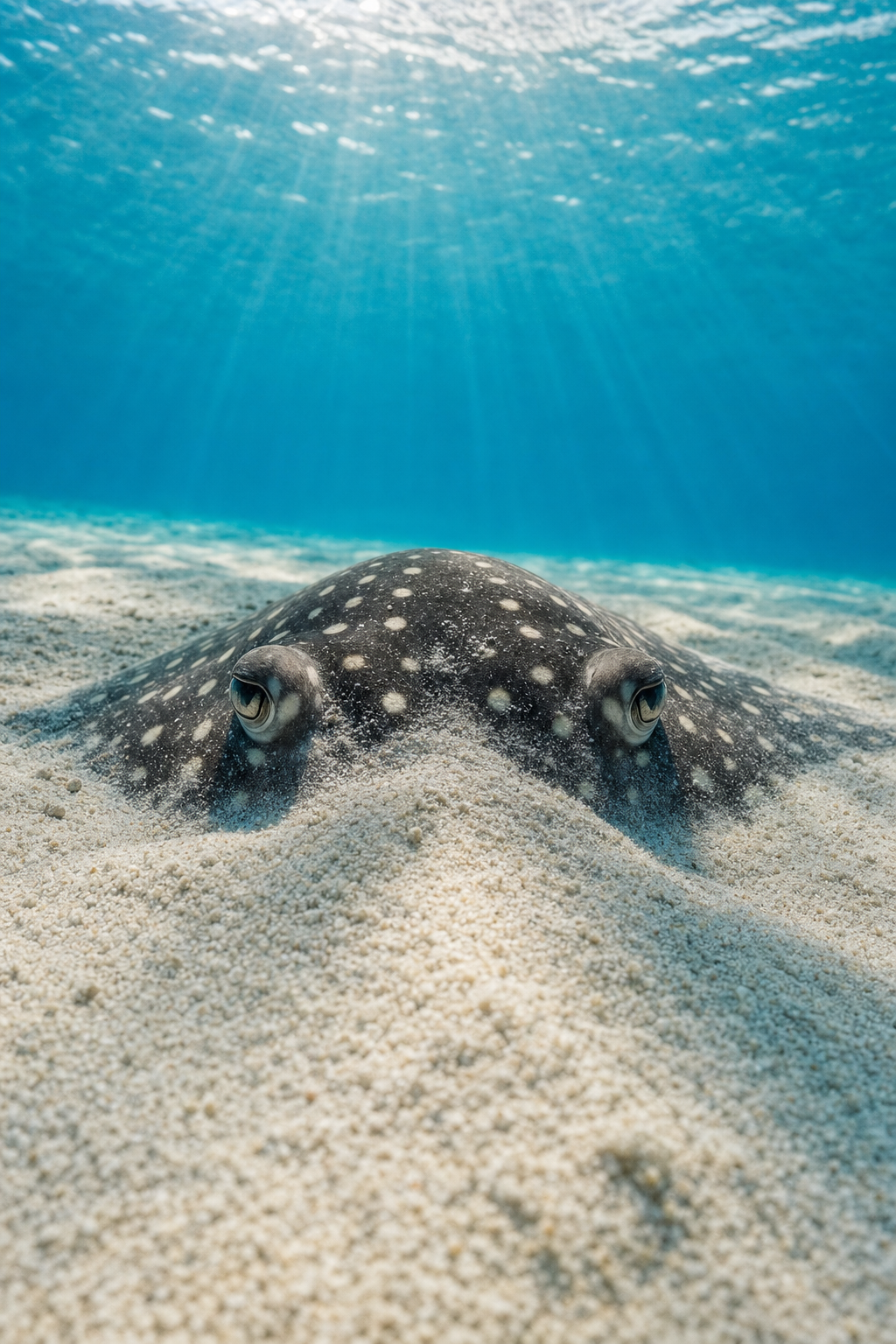
Managing the transition from the surface to the underwater world is as much a mental exercise as a physical one. If you feel your heart rate climb while gearing up on the boat or during your descent, utilize the professional diving protocol: Stop, Breathe, Think, Act. This sequence is designed to interrupt the physiological panic loop before it escalates. By physically stopping all movement, you prevent the flight instinct from taking over. Once stationary, you can concentrate on the second and most critical step: your breath.
Carbon dioxide buildup is often the hidden culprit behind underwater anxiety. When you take short, shallow breaths, $CO_2$ accumulates in your lungs, which triggers a primal air hunger sensation in your brain. This makes you feel like you are suffocating even when your tank is full and your regulator is delivering air perfectly. To counter this, focus entirely on a long, controlled, and forceful exhalation. By emptying your lungs completely, you allow for a fresh intake of oxygen, lower your heart rate, and signal to your nervous system that the perceived threat has passed.
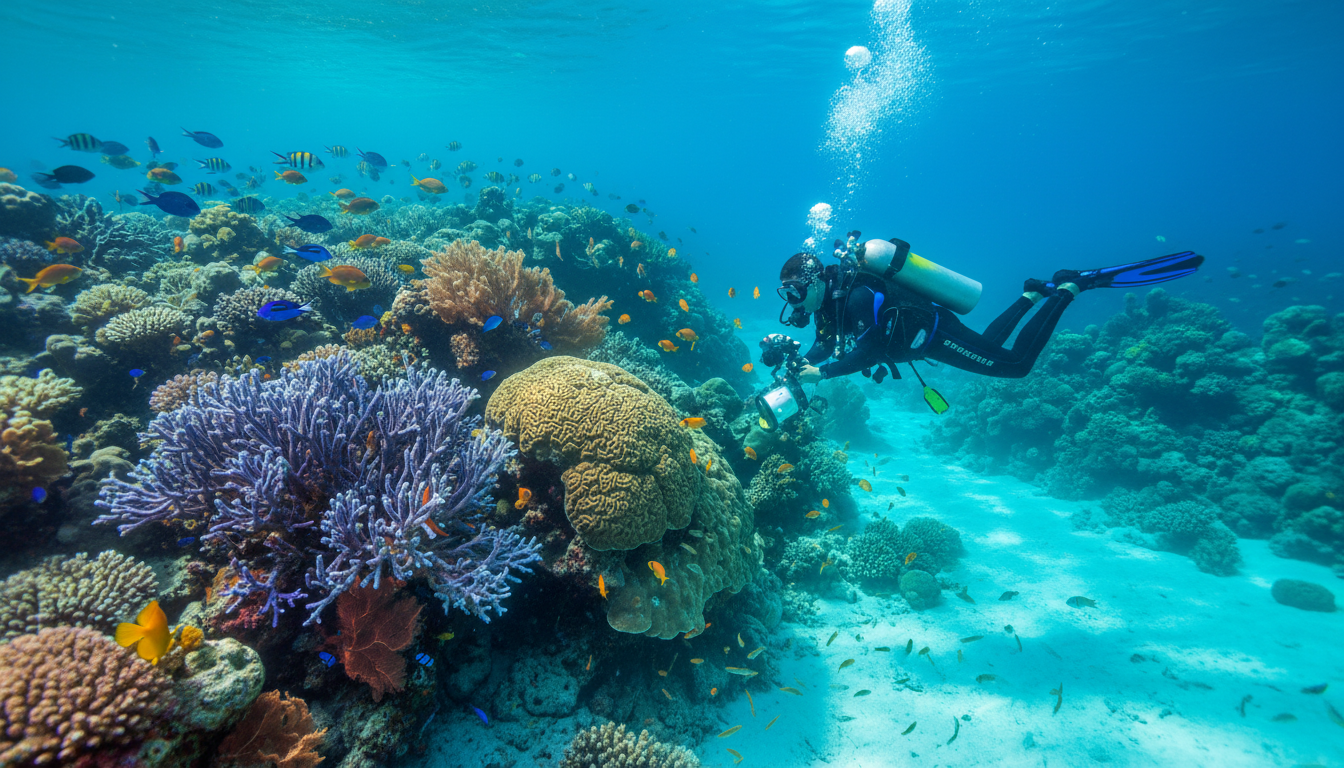
A common trigger for thalassophobia is the vastness of the open water. Staring into the deep blue can feel disorienting and overwhelming because the brain lacks a point of reference. A highly effective grounding technique practiced by many divers is to intentionally narrow your field of vision. Instead of looking into the distance, find a specific, small object within your immediate reach. Study the intricate, maze-like ridges of a brain coral; watch the rhythmic movement of a single neon damselfish as it defends its territory; or search for a tiny, brightly colored nudibranch on a rock. Shifting to this macro perspective forces your brain to process concrete, fascinating details, which effectively crowds out abstract fears of the deep.
These physical grounding techniques are foundational for anyone overcoming fear of scuba diving. While these steps are effective during guided fun dives, they become second nature when practiced under the close, calm supervision of an expert during private PADI certification courses. If you are curious about how these techniques can be applied to your specific needs, get in touch with our team to discuss a personalized approach to your training.
Overcoming Fear of Scuba Diving with Private, Personalized Training
Grounding techniques are most effective when your external environment supports focus rather than chaos. Large scale dive operations, often referred to as cattle boats, frequently prioritize schedule over individual comfort. When you are one of twelve divers, the pressure to keep up can exacerbate existing anxieties. Many nervous divers feel embarrassed to signal a problem or ask for a repeat of a skill, fearing they are a burden to the group. This social pressure can lead to rushed movements and suppressed stress, which are precursors to panic.
Premium, private instruction eliminates this psychological friction. By choosing private PADI certification courses, you ensure that the instructor’s sole focus is your emotional safety and technical proficiency. If a specific skill like mask clearing or regulator recovery causes hesitation, we pause the curriculum. There is no rigid timeline requiring us to move to deeper water before you feel completely ready. We can spend extra time in waist deep water, practicing until the equipment feels like a natural extension of your body rather than a foreign object.
This personalized approach also allows for consistent, reassuring physical contact. For a diver overcoming fear of scuba diving, having an instructor within arm's reach, or even holding a hand during the initial descent, provides a powerful tactile anchor. This level of attention ensures that every breath is monitored and every non verbal cue is understood. If you are ready to move at a pace that respects your boundaries, get in touch with our team to arrange a customized training plan.
The Best Diver Friendly Shallow Reefs in Isla Mujeres and Cancún
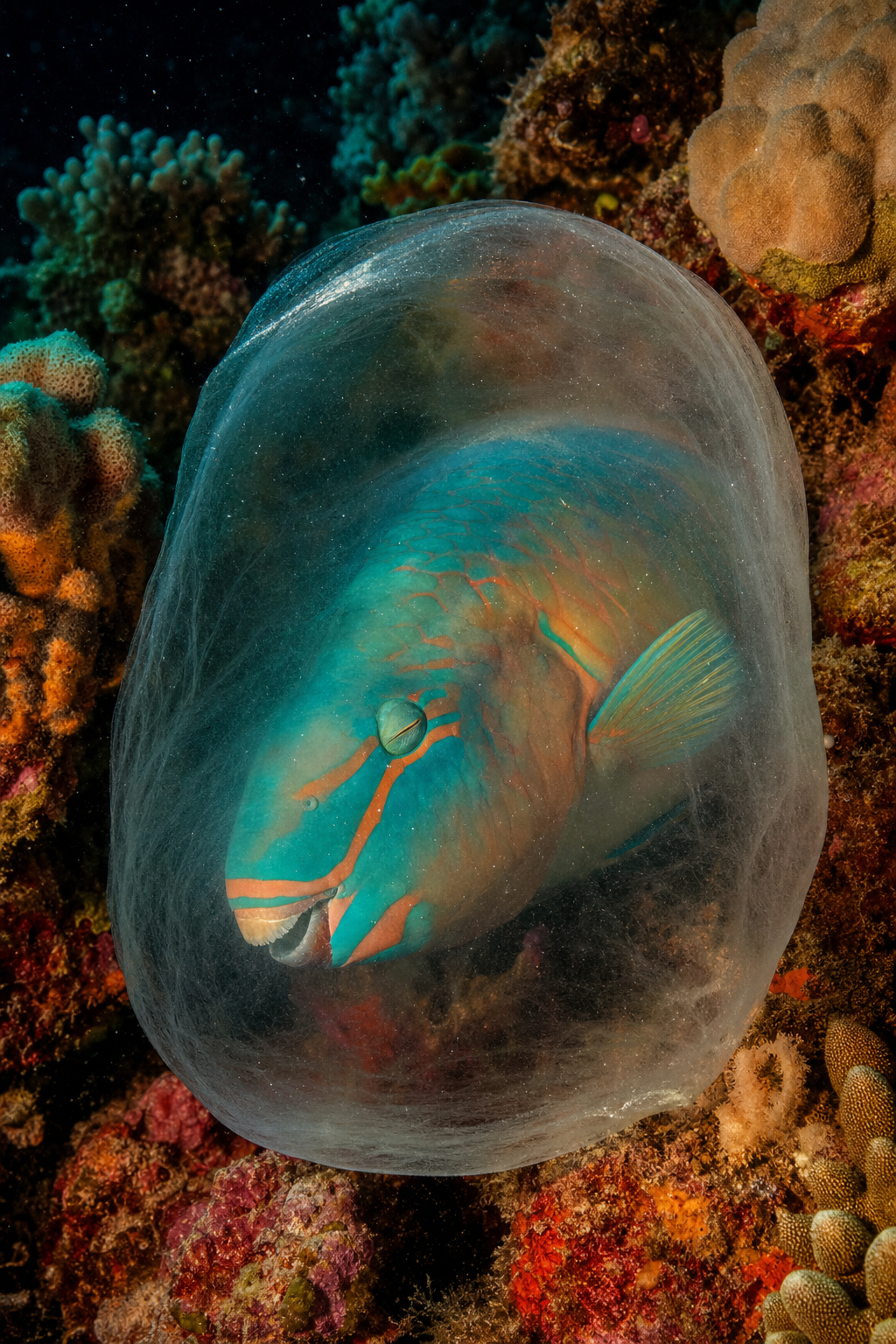
The physical environment plays a decisive role in the psychological success of a new diver. While regions like Cozumel are famous for dramatic wall dives and plunging drop-offs, these environments can be inherently intimidating for those still overcoming fear of scuba diving. The lack of a visible bottom can trigger vertigo or a sense of vulnerability. In contrast, the waters surrounding Isla Mujeres and Cancún offer shallow, protected reef systems that function more like a natural aquarium than a vast, unpredictable ocean.
Manchones Reef is arguably the premier location for nervous swimmers and first-time divers. Located just off the coast of Isla Mujeres, the reef sits at a consistent depth of approximately 30 feet (10 meters). The visibility here frequently exceeds 60 feet, allowing you to see the bright white sand flats from the moment you begin your descent. This white sand acts as a natural reflector, illuminating the reef and providing a constant, clear visual reference point. Knowing that the seafloor is always within sight helps eliminate the fear of the unknown deep that often plagues beginners.
Currents at Manchones are typically minimal to non-existent, creating a pool-like setting where you can focus on your buoyancy rather than fighting water movement. This stability is ideal for both guided fun dives and the initial open water sessions of private PADI certification courses. Instead of managing the stress of a dark or surging environment, you can concentrate on the vibrant schools of grunts, snappers, and the famous underwater statues of MUSA. Selecting a site with these specific geographic advantages ensures that your first experiences are defined by wonder rather than worry. If you want to discuss which reef site is best suited for your current comfort level, get in touch with our team.
Conquering your fear of the ocean is a personal journey that begins with a single, calm breath. By focusing on your technique and staying patient with yourself, you can transform initial anxiety into a genuine sense of wonder. If you feel ready to take that next step with guided support, we are here to help you navigate the process safely. Exploring our PADI CERTIFICATIONS is a wonderful way to build your confidence under the watchful eye of an expert. Let us help you turn your curiosity into a lifetime of underwater adventure.